COMPUTER NOISE MODELLING
ENVIRONMENTAL NOISE ASSESSMENTS
COMPUTER NOISE MODELLING ASSESSMENTS
WHAT IS COMPUTER NOISE MODELLING
Noise modelling is the practice of predicting noise emissions from facilities, sites and transport, usually with a large number of noise sources or in complex environments, through the use of predictive computer software. It is one of Acoustic Compliance Australia’s specialisms, one of our core environmental noise services, and one of the aspects we are best known for in the Industry.
It is used to accurately predict what noise sources are the main contributors to noise emissions in the surrounding environment and how the noise environment will change when the dominant noise sources are acoustically treated.
Our suitably qualified acoustic consultants are extensively experienced in preparing noise models and provide advice on a range of aspects including:
- What site noise levels will be at noise sensitive receivers in all directions around the site
- What noise levels will be at residential dwellings without the need for accessing private property
- How different meteorological conditions impact the predicted noise level
- What the noise levels is for separate scenarios, i.e. different noise source locations or operating modes
- How the noise environment will change with inclusions of new equipment or upgrades
- How much noise mitigation is required for each individual noise source to achieve overall site wide compliance
- Feasibility studies on noise control treatment options such as noise walls, earth berms or barriers, industrial noise control and management controls
- Verification that practical noise control treatments will be successful in lowering off-site noise emissions to acceptable noise goals
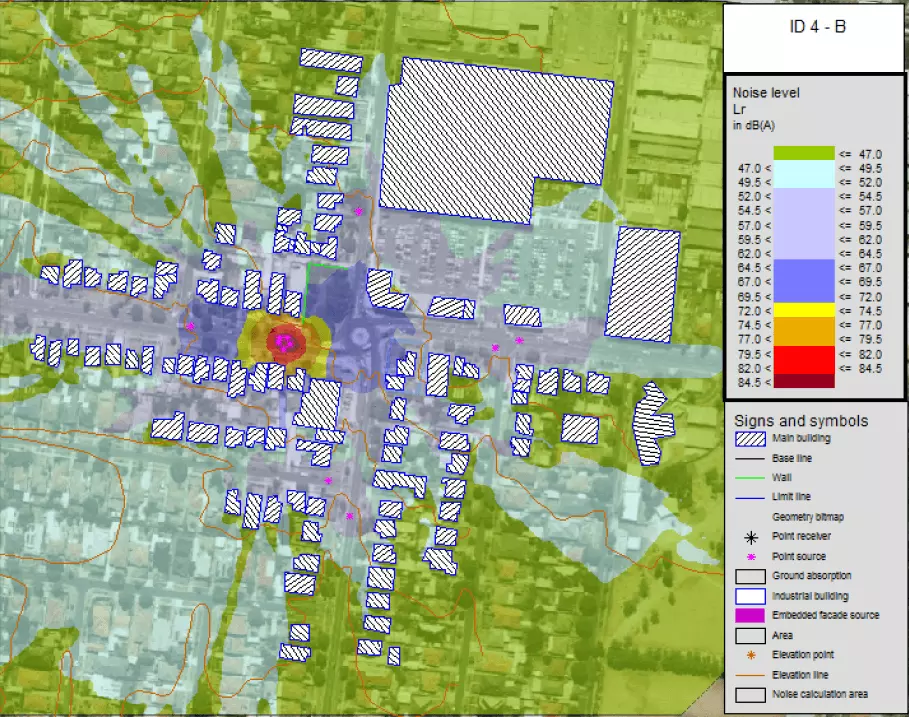
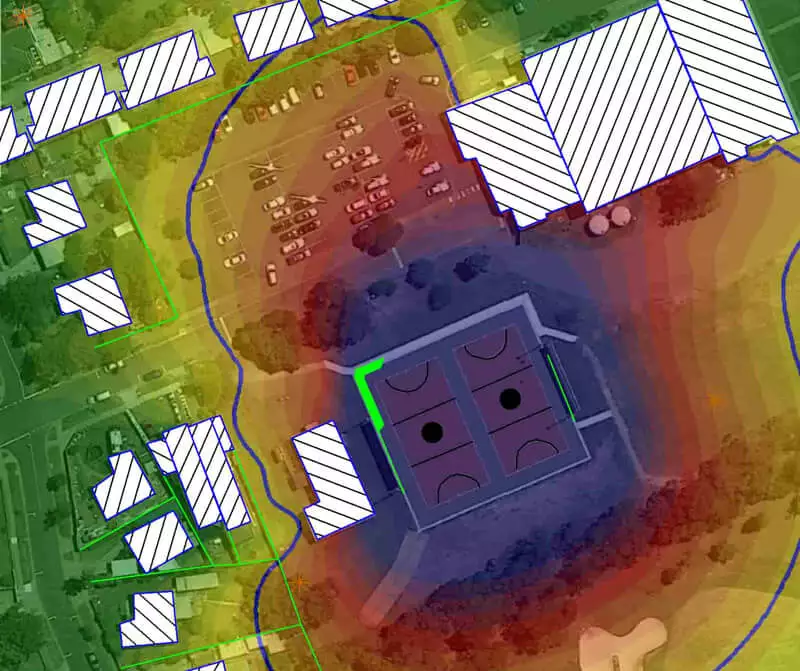
- Noise contour maps detailing site noise footprints and noise limit lines indicating where compliance has been achieved
- Preparation of Noise Control Programmes or Remedial Action Plans by working with you to develop a path forward to achieve site wide compliance
- Auralisation – The ability to hear audio of what the predicted noise noise would be at any off-site location
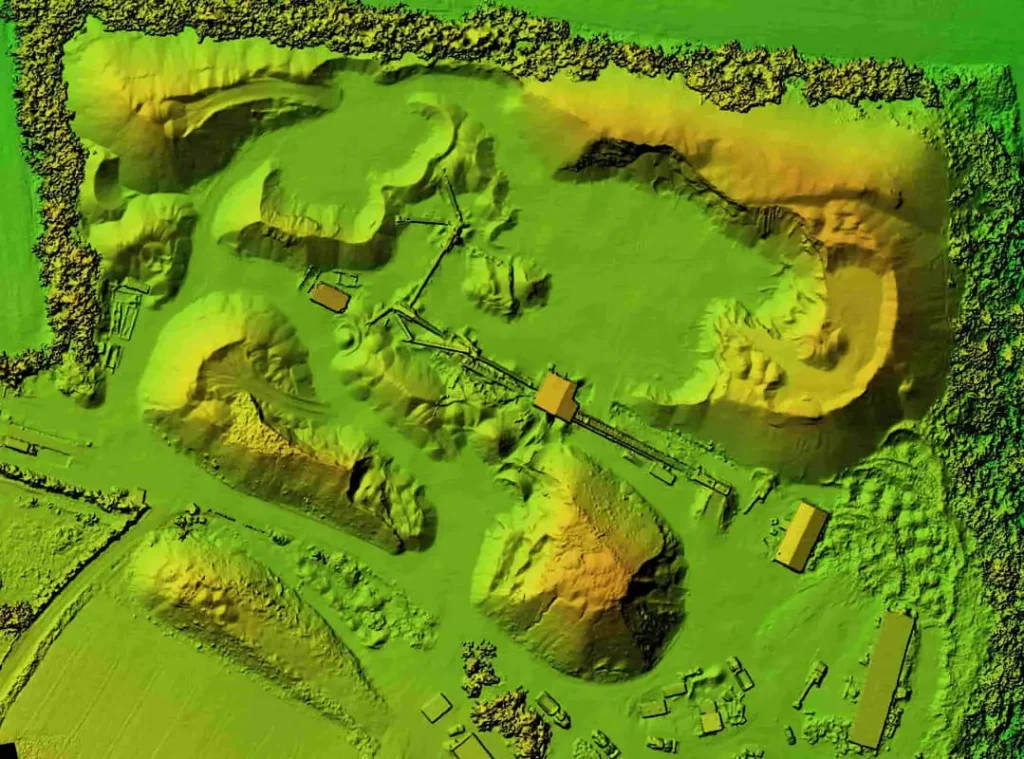
- Photogrammetry and Lidar of site facilities and assets allows for the creation of 3D colourised models to be inputted into the noise model. This enables for clearer communication of what noise source require treatment and how that information is presented
WHEN IS NOISE MODELLING REQUIRED
WHAT'S INVOLVED
Noise models are created by inputting a wide variety of different types of data into software, with the ultimate aim of replicating reality as far as possible and accurately predicting what noise levels are currently, or will be in the future.
- Topographic data pertinent to the local area
- Location and elevation of relevant client facility, sites or assets
- Location, elevation and directionality of major noise sources associated with the facility operations
- Histogram of noise source operational times
- Location and elevation of noise sensitive receivers
- Location and elevation of miscellaneous buildings, structures and terrain in the propagation path between source and receiver
- Ground absorption and meteorological properties
- Photogrammetry of facilities and surrounding area to create colourised 3D models
- Lidar of site assets to create colourised 3D models
- Environmental noise assessment noise criteria and operational modes
VICTORIA: WHY YOU NEED AURALISATION
With the introduction of the General Environmental Duty by EPA Victoria, sites and facilities are required to minimise their off-site impacts and can be legally required to reduce noise further, even if their noise emissions are compliant with Noise Protocol noise limits, if it is shown to be reasonable and practicable to do so.
Auralisation provides the ability to hear audio of what the predicted noise would be at any off-site dwelling or apartment, not just the noise level in decibels. Further it can provide the ability to hear what the predicted noise would be inside those habitable spaces. By incorporating auralisation into noise modelling projects, Acoustic Compliance Australia can provide clarity on if noise emissions are reasonable to manage risk for environmental noise impacts.
INDUSTRIES WE SUPPORT WITH OUR SERVICES
- Agriculture
Dairy / Grain / Abattoirs / Growers / Processing Facilities
- Manufacturing
Materials / Component / Chemical / Food / Timber, Glass & Steel
- Power Generation
Peaking Power Stations / Base Load Power Stations / Wind Farms
- Critical Infrastructure
Roads / Water / Ports / Rail / Emergency
- Entertainment
Indoor and Outdoor Music Venues and Events / Shooting Ranges / Motor Sporting / Bars, Clubs & Restaurants
- Logistics
Warehousing / Container Yards / Depots / Distribution Centres
- Health & Fitness
Gyms / Pools / Community Centres / Sporting Facilities
- Other
Recycling / Councils / Fast Food, Petrol Stations & Car Washes / Asset Management / Small Business & Residential